Conversation design
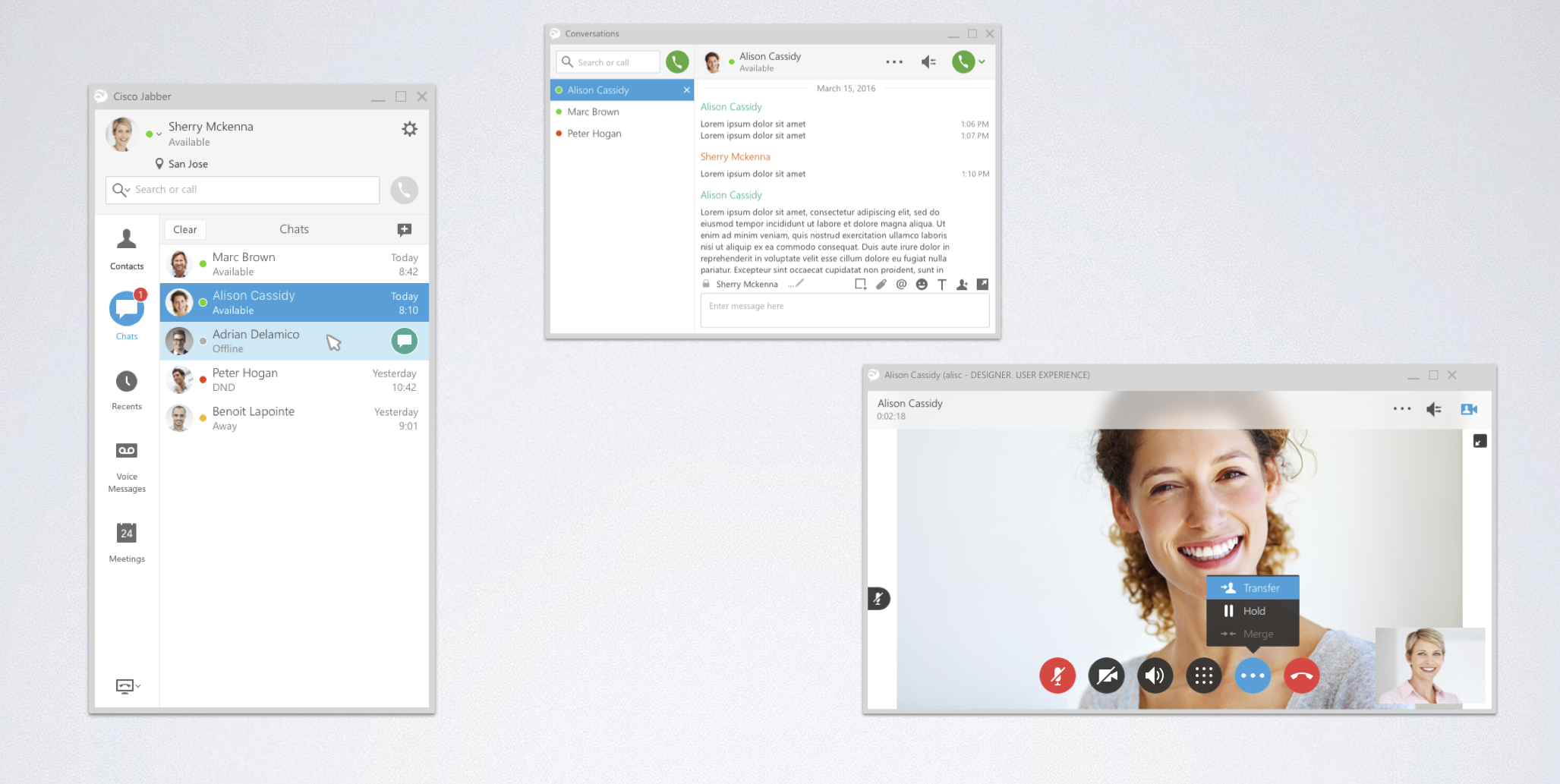
One of the most impactful changes I introduced to Jabber was the addition of emoji, GIFs and inline images. At the time, Jabber was primarily a text-based enterprise tool and there was internal debate about whether expressive features like these were appropriate for a business context. I pushed for bringing it closer to the consumer messaging apps that people were already using in their personal lives – WhatsApp, iMessage and Slack had all established emoji as a natural part of digital conversation by this point, and I felt that withholding them from Jabber created an unnecessary formality that worked against genuine communication. The changes were well received by users and contributed to Jabber feeling like a more engaging and personal tool. This work reflected a broader design philosophy I held throughout my time at Cisco: that enterprise communication products should meet people where they are, not ask them to communicate in a way that feels unnatural.
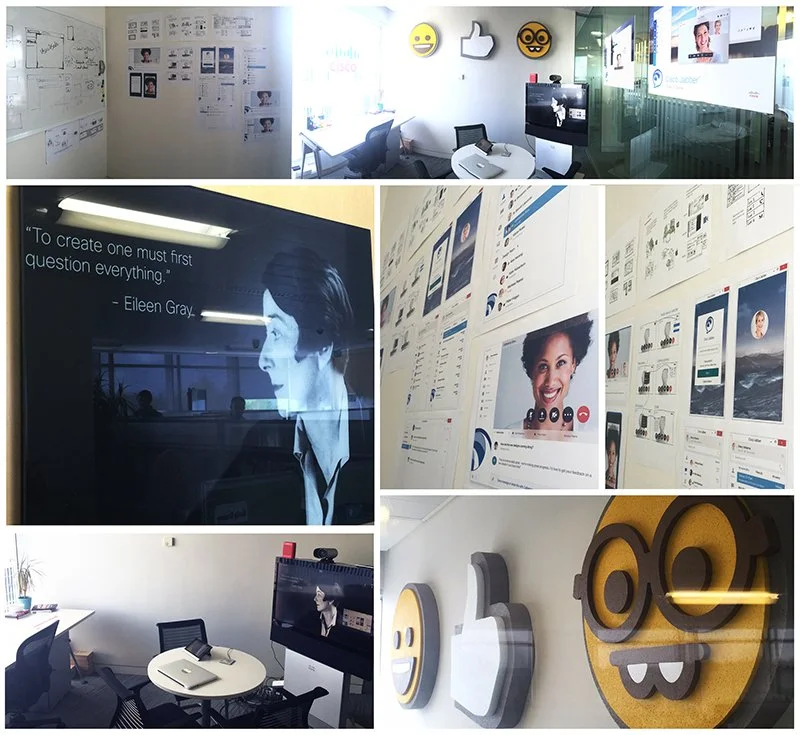
To celebrate the launch of expressive messaging features, we decorated the office and our design studio with large emoji and had lanyards printed decorated with emojis.